
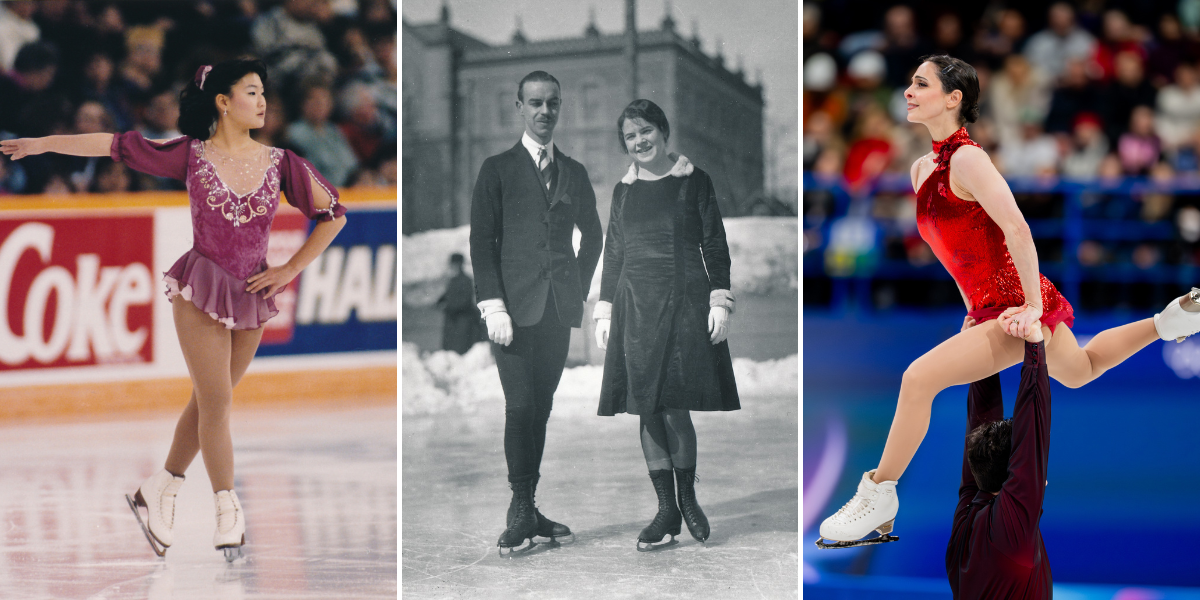
Figure Skating Fashion Through the Decades
Today, a single figure skating costume can take more than 150 hours to create. Every crystal, fabric choice and stitch is carefully considered to enhance movement, capture attention and tell a story on the ice.
But long before rhinestones and couture designs, skaters competed in wool sweaters, ankle-length skirts and even hats. Here’s a look at how skating costumes evolved from practical winter wear into performance art we see today.
Function Over Fashion
In the early days of figure skating, practicality came first. Throughout the 1800s and early 1900s, competitions were held outdoors, so costumes needed to provide warmth as much as style.
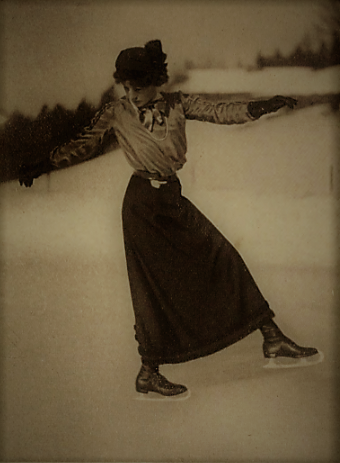
British figure skater Madge Syers.
Women wore long skirts paired with heavy jackets, while men skated in tailored suits and hats. Thick wool fabrics were the norm, making early skating attire look much more like everyday winter clothing than modern competition costumes.
The Hemline Revolution
Everything began to change in the 1930s thanks to Norwegian skating star Sonja Henie.
Henie shocked audiences by shortening her skirts above the knee, a controversial move at the time that gave her more freedom to jump and spin. As her popularity soared, shorter skirts quickly became the new standard in women’s figure skating.
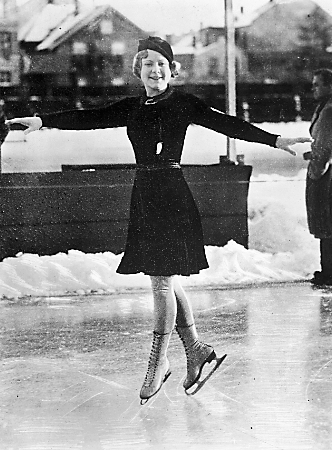
Sonja Henie at the 1934 World Championships.
This trend continued into the 1940s with Canada’s own Barbara Ann Scott. Known as Canada’s Sweetheart, Scott’s elegant style became just as admired as her skating. Her simple silhouettes and shorter hemlines influenced skaters across the country and even inspired the iconic Barbara Ann Scott doll released after her 1948 Olympic gold-medal victory.
Lights, Camera, Costumes
By the 1960s and 1970s, figure skating had a new audience: television viewers.
The arrival of colour television transformed the sport, and suddenly costumes needed to stand out on screen as well as in the arena. At the same time, competition on indoor skating rinks became more common, eliminating the need for heavy layers.
Men’s style evolved from traditional black suits to brighter colours and more fitted designs. Women’s styles embraced clean silhouettes, high necklines, long sleeves and bold colours inspired by contemporary trends.
Even so, costumes weren’t yet the centre piece of a performance. Most skaters focused on selecting the right colour rather than making dramatic fashion statements on the ice.
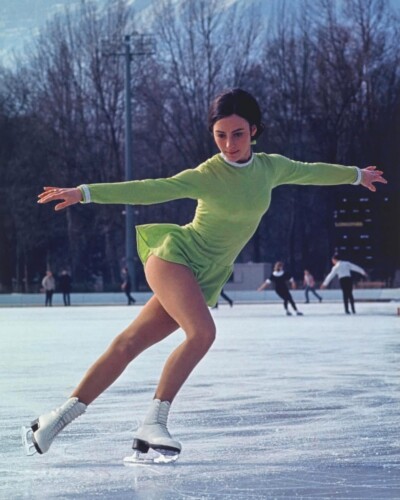
Peggy Fleming at the 1968 Olympic Winter Games | Photograph by John G. Zimmerman
One famous example was American skater Peggy Fleming, who wore a striking chartreuse dress at the 1968 Olympic Winter Games in Grenoble, where she went on to win gold. The eye-catching dress was made by her mother, who drew inspiration for the colour from the Chartreuse Mountains and its famous monastery, where monks made liqueur, which was also called chartreuse.
The Era of Glitter and Glamour
When the 1980s arrived, so did the sparkle. New fabrics such as spandex and mesh made costumes lighter, more flexible, and more elaborate. Rhinestones, feathers and dramatic embellishments exploded onto the ice as skaters embraced increasingly theatrical designs.
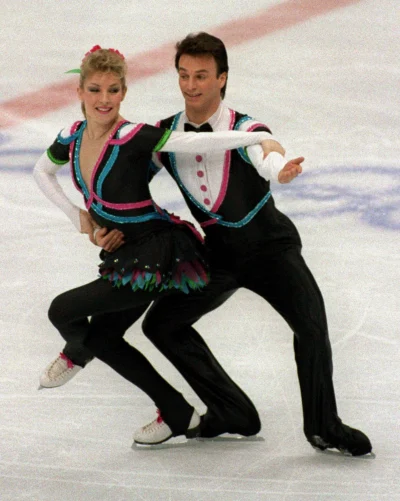
Tracy Wilson & Rob McCall at the 1988 Calgary Winter Olympic Games.
But the bold fashion also sparked controversy.
At the 1988 Olympic Winter Games in Calgary, East German star Katarina Witt wore a Broadway-inspired blue costume with feathers and a high-cut design. The outfit led the International Skating Union (ISU) to introduce stricter costume regulations, unofficially dubbed as the “Katarina Rule,” requiring women’s hips and midriffs to be covered.
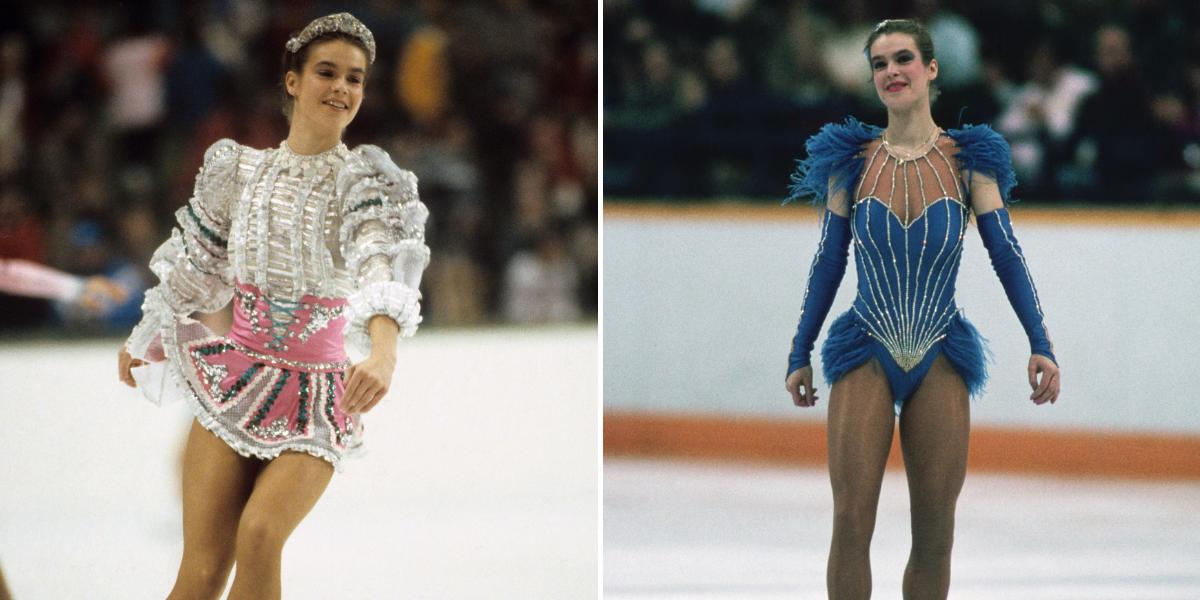
Katarina Witt at the 1984 (left) and (right) 1988 Olympic Winter Games.
That same year, American skater Debi Thomas made headlines by competing in a full unitard, prompting additional costume regulations. While women can now compete in pants, men are still required to wear full-length trousers.
Couture Comes to Centre Ice
By the 1990s, figure skating fashion got a designer upgrade.
At the 1992 Olympic Winter Games in Albertville, French designer Christian Lacroix created glamorous, gemstone-encrusted costumes for French skater Surya Bonaly. Around the same time, American skater Nancy Kerrigan famously wore designs by Vera Wang at both the 1992 and 1994 Olympic Games.
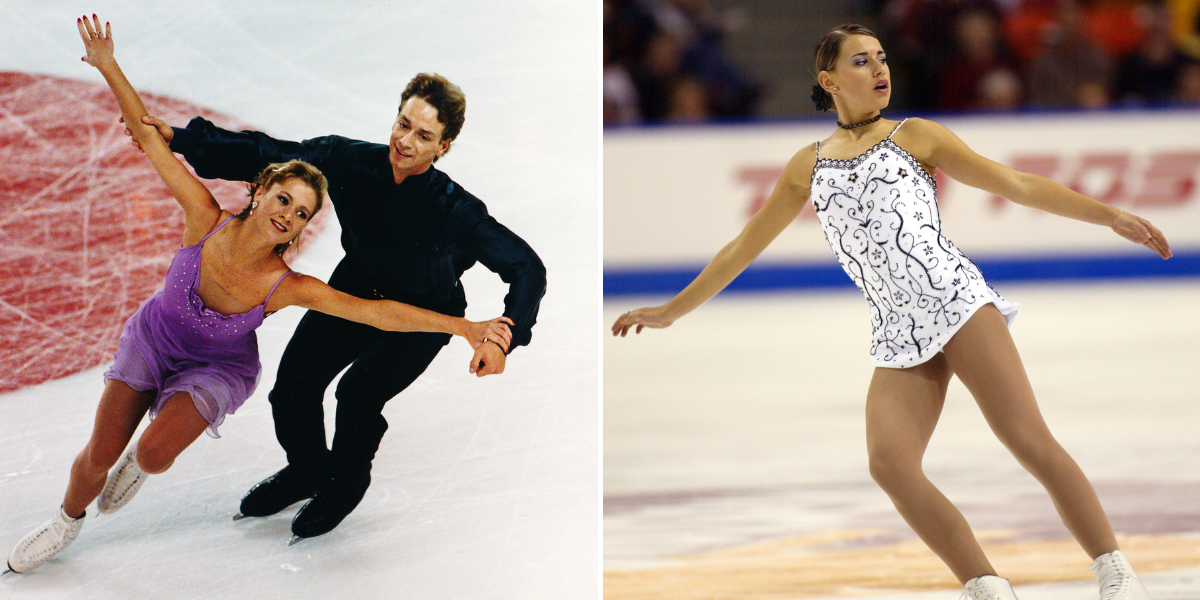
Shae-Lynn Bourne & Victor Kraatz in 1999 and Cynthia Phaneuf in 2004.
As fashion trends evolved through the 1990s and early 2000s, so did skating costumes. The dramatic glamour of the 1980s gave way to sleeker silhouettes, crushed velvet and elegant beadwork inspired by runway and red-carpet fashion.
Costumes As Storytelling
Today, costumes are more personal than ever. Designers draw inspiration from athletes’ music, cultural backgrounds, and the stories they want to share on the ice. Costumes have become an essential part of the performance, helping bring programs to life.
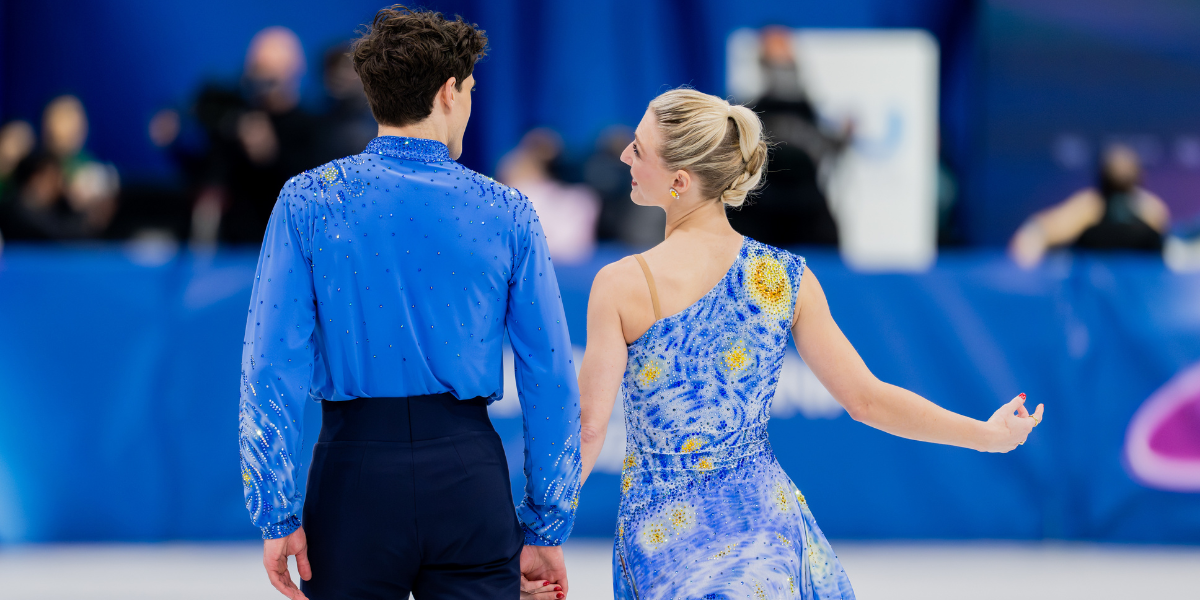
Piper Gilles and Paul Poirier at the 2026 Olympic Winter Games.
One memorable recent example came from Piper Gilles and Paul Poirier’s 2025–2026 Vincent free dance, where Gilles’ dress incorporated elements of Vincent van Gogh’s “The Starry Night”, bridging the artistic vision from canvas to ice.
Designing Modern Looks
Skaters continue to collaborate with world-renowned fashion houses, further highlighting fashion’s growing influence in the sport. During the 2026 season, Deanna Stellato-Dudek wore two custom-made Oscar de la Renta dresses, marking the fashion house’s first figure skating costume designs. Both designs were intricately hand-beaded and engineered for movement, balancing couture craftsmanship with the technical demands of pair skating.
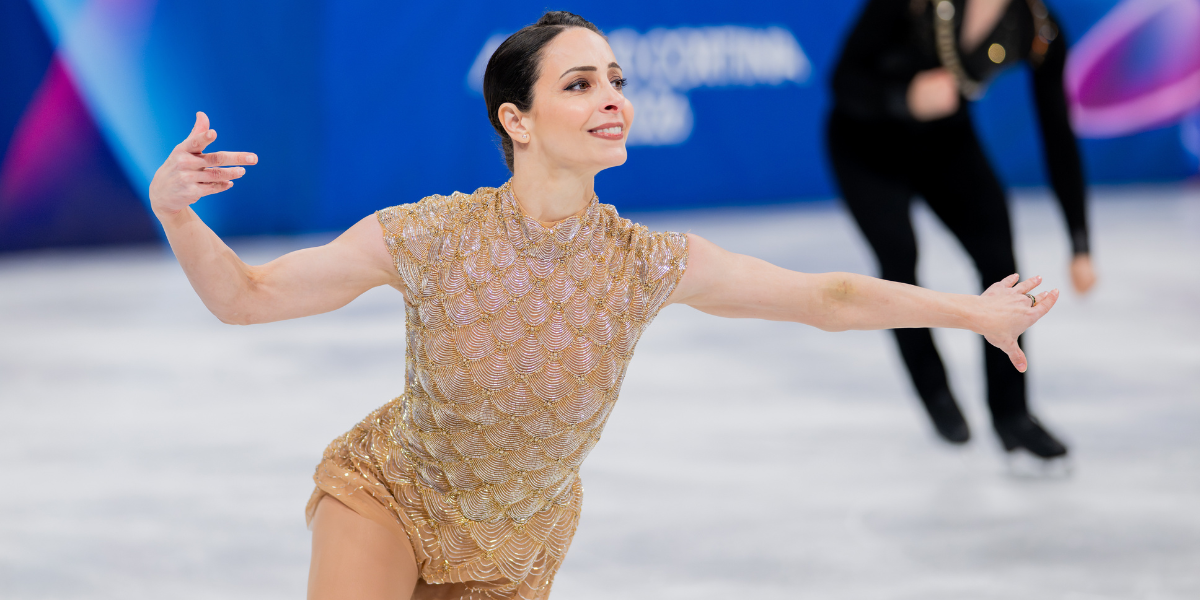
Deanna Stellato-Dudek at the 2026 Milano Cortina Olympic Winter Games.
From wool skirts and practical jackets to couture creations covered in crystals, figure skating fashion has come a long way. And if history is any indication, the next era of skating style is sure to be just as memorable.