
Sarah Kawahara and the Art of Choreography on Ice
Across decades of work spanning competitive skating, film, television and live ice shows, Skate Canada Hall of Fame choreographer Sarah Kawahara has built a career around one guiding principle: great choreography is about making the skater shine.
Whether working with Olympic champions, Hollywood actors or performers from around the world, she uses movement to spotlight skaters’ individuality.
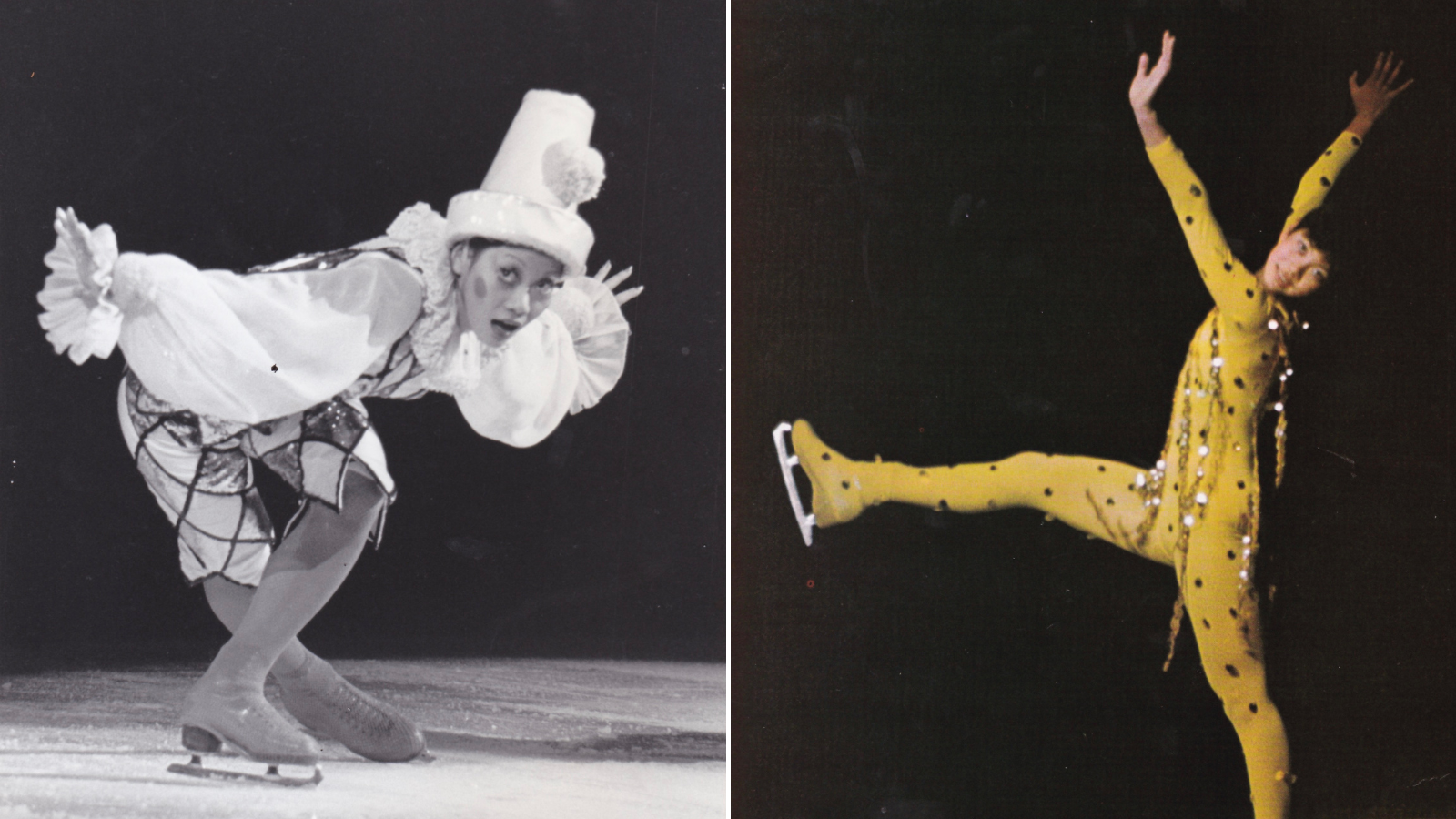
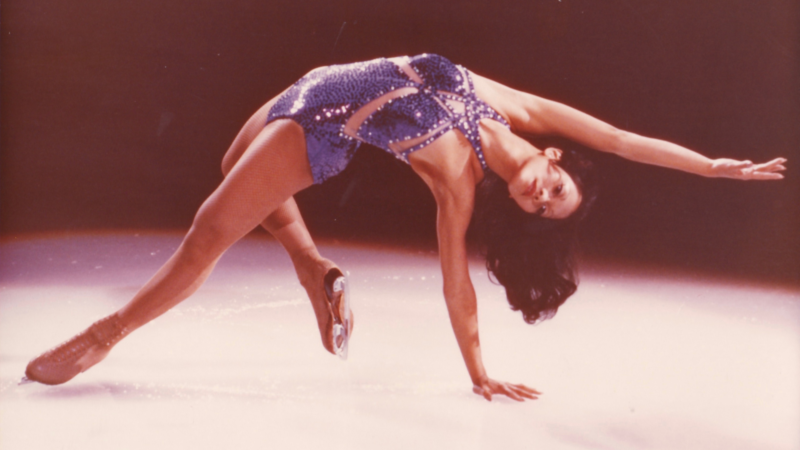
Her journey began in competitive skating before shifting to the Ice Capades at age 18, where she discovered her passion for bringing characters to life on the ice. The experience shaped her artistic voice and opened the door to a new world of creative expression.
Kawahara in the Ice Capades.
Making Skaters Shine
Kawahara believes that choreography is about collaboration, not control.
“I think being a good choreographer, you can’t just impose your vision onto a person,” she explained. “If you want to be successful, it’s not about making yourself shine. It’s about making the skater shine.”
Working with elite skaters like Peggy Fleming, Kurt Browning, Toller Cranston, and Scott Hamilton, she learned that no two athletes move or express themselves in the same way. Each has a unique way of moving which requires a different creative approach. Throughout her career, she has welcomed the challenge of adapting her unique choreography to different body types and energies.
Today, she carries these experiences with her as Artistic Director for Willy Bietak Productions, where she creates large-scale ice shows for cruise lines. Working with skaters from diverse cultural and artistic backgrounds continues to shape her perspective.
“We all have skating in common … that’s what pulls us together,” she said.
For Kawahara, the most powerful performances come when skaters are given the space to express who they are and connect with their creativity. By embracing each performer’s identity and experience, she creates work that feels authentic.
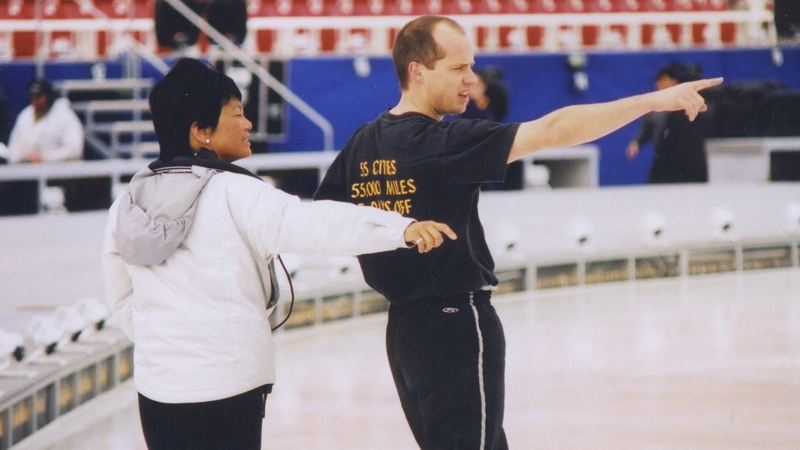
Sarah Kawahara working with Kurt Browning.
Inside the Creative Process
Kawahara’s ability to bring out that authenticity is rooted in a creative process that extends far beyond the rink. She draws inspiration from sources like nature, patterns, and textures to transform them into storytelling on the ice. Her shows have explored unique themes like the seasons, tarot cards, and even the periodic table.
Equally important is her commitment to growth, which she believes comes from looking beyond skating.
“You can learn from different artistic disciplines. You can learn from opera, from Broadway, from television, even TikTok,” she explained. “You can’t just stay in one place to learn.”
This openness to inspiration allows her to continuously refine her work and explore themes that entertain while resonating with both performer and audience.
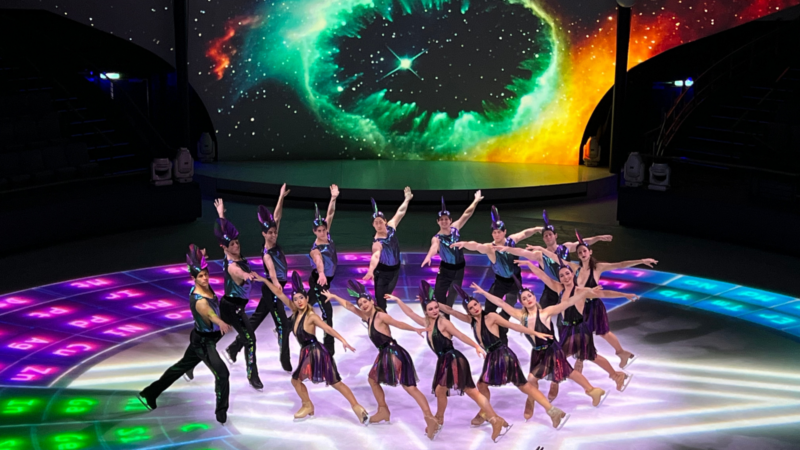
Starburst: Periodic Table–themed production.
Stories Brought to Life
Throughout her career, Kawahara has embodied this philosophy across a range of high-profile projects, each requiring its own balance of creativity and precision.
One standout moment came with the Scott Hamilton: Upside Down television special, which earned her an Emmy Award. In this project, she choreographed her own version of “Step in Time” from Mary Poppins. The rink was transformed into a rooftop scene, complete with chimneys, skylights, and acrobatic performers.
“It was so exciting,” she recalled. “I’ve always been influenced by the choreography in Mary Poppins, and it was a privilege to be able to put it on ice.”
Her work on the film I, Tonya starring Margot Robbie, presented a different challenge. Rather than following her innovative choreography style, Kawahara was tasked with recreating Tonya Harding’s original programs. Drawing on her experience working with skaters from that era, including Nancy Kerrigan, she approached the project with the mindset of creating a documentary, bringing precision and historical accuracy.
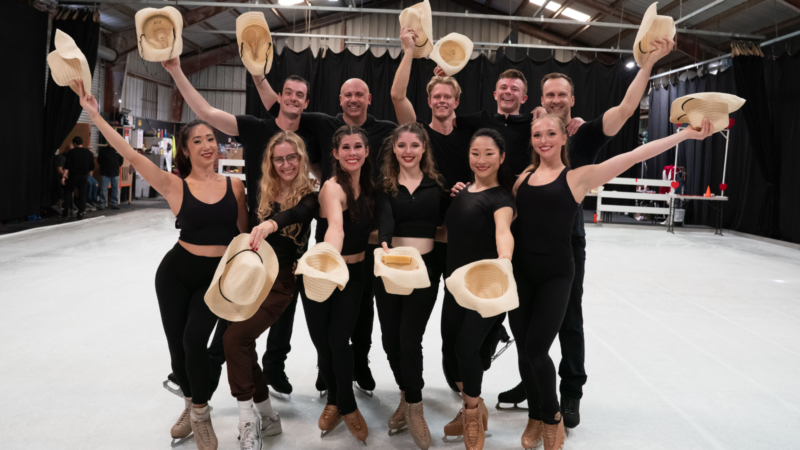
The cast of Boots and Blades for Legend of the Seas and Liberty of the Seas, by Willy Bietak Productions
Kawahara’s Impact
While Kawahara’s career has been marked by awards and global recognition, it’s the growth she sees in others that stands out most.
“It’s a wonderful thing to see people grow – growing as people, as athletes and as artists,” she said. “It’s very gratifying to watch.”
Across every project, her impact is reflected not only in the work on the ice, but in the performers she helps shape. By prioritizing authenticity and collaboration, she continues to push the boundaries of choreography while evolving her own creativity and artistry along the way.
Discover the inspiring stories of other Skate Canada Hall of Fame members in our Virtual Museum.