
Championing Women’s Sport: Carolyn McEwen’s Impact Across Ice and Pitch
What do figure skating and rugby have in common? More than you might expect, according to Carolyn McEwen. A Skate Canada Technical Official, professor of kinesiology at the University of British Columbia (UBC), and coach with both UBC’s and Canada’s women’s rugby teams, McEwen has built her career on a love for sport and passion for helping athletes reach their goals, not just as competitors, but as people.
Whether it’s coaching Canada to a world silver medal or officiating an international figure skating event, at the heart of her work is a dedication to creating environments where athletes can show up fully and confidently as themselves.
A Lifelong Love of Sport
McEwen laced up her first pair of skates at age three in Skate Canada’s CanSkate program and quickly found her home on the ice. She progressed through the competitive stream and eventually competed in pairs at the senior national level before retiring at 18 to pursue post-secondary education full time.
But walking away from competition didn’t mean leaving skating behind.
“When you grow up in the sport, that’s your community and your people,” she says.
McEwen began officiating almost immediately, staying closely connected to the sport. At the same time, her academic interests deepened. Curious about the science behind performance, she pursued studies in physical education, kinesiology and sport psychology, ultimately earning a PhD in the field.
Whether she’s officiating, coaching or teaching, her goal remains consistent: create environments where athletes can flourish in sport and in life. Seeing sport from multiple perspectives, she says, has helped with her own self-development.
“I think that just enriches my life so much because I get to see different perspectives and different ways people think,” she explained.
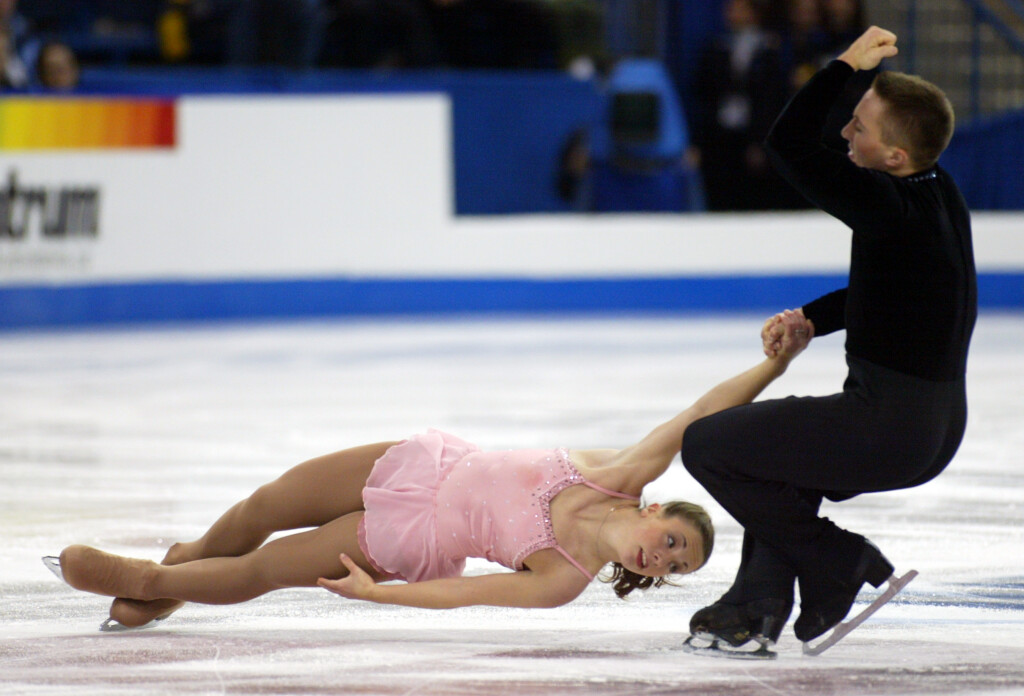
Carolyn McEwen and skating partner Gord Willemse at the 2003 Canadian National Skating Championships.
From the Ice to the Pitch
During her studies, McEwen briefly explored bobsledding before a friend suggested she try rugby. With time on her hands and a love of training, she said yes.
“I always love training and just the process of trying to get better at something,” she explains. “That’s what I loved about skating too…there’s always something to fine tune.”
Her years of pair skating training, where body awareness and trust are essential, unexpectedly translated well to rugby. As a prop (a forward), she relied on understanding how her body moved in relation to her teammates, a skill she had developed on the ice.
She quickly fell in love with the rhythm of the game.
“In an 80-minute match, there are so many redemption opportunities,” she says. “That’s what I love about rugby.”
Her passion carried her to the international level before she retired to focus on teaching at UBC. Soon after, she was encouraged to try coaching. What began as helping for an hour a week grew into 15–20 hours, and eventually a role with the national team.
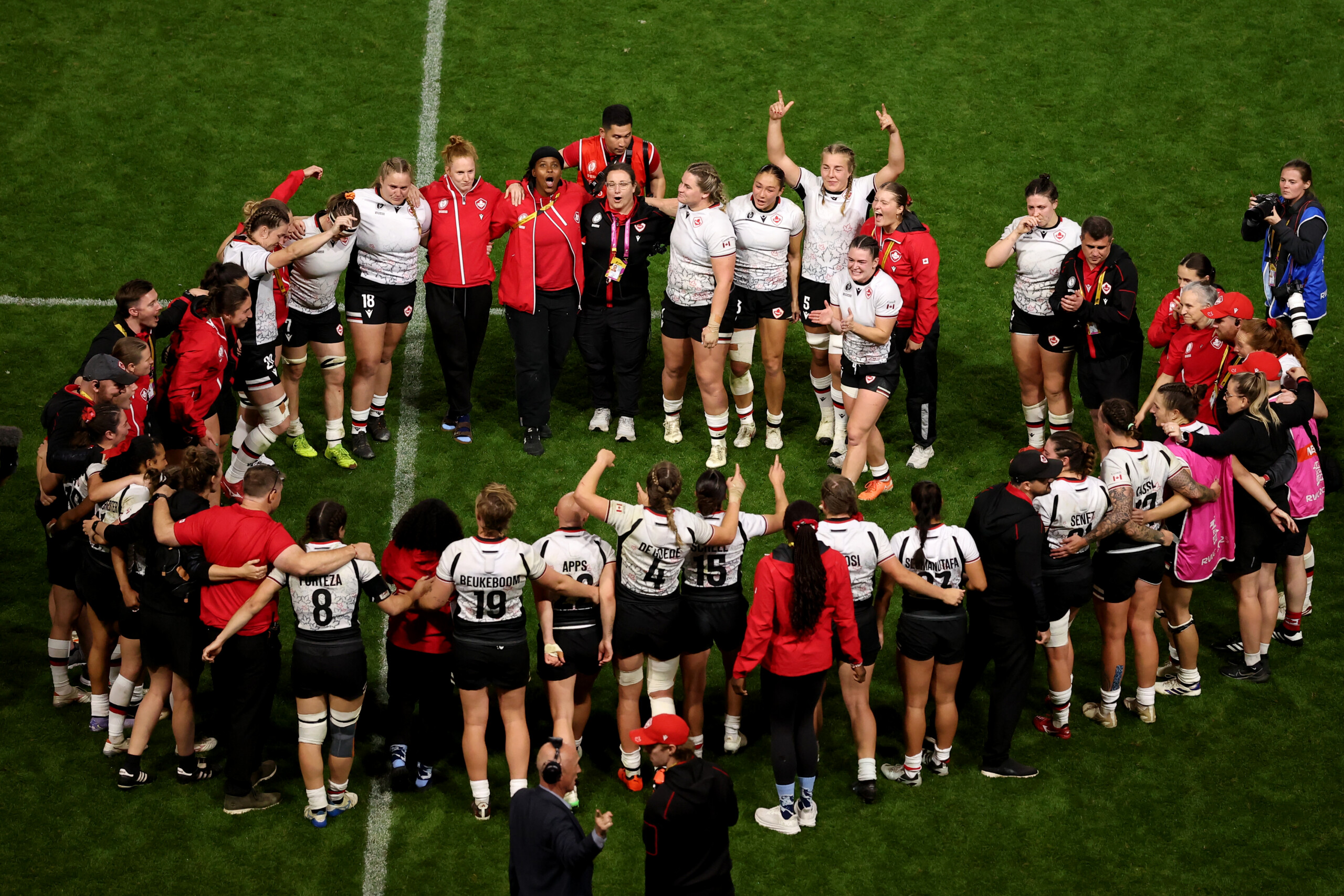
The silver medal at the 2025 Women’s Rugby World Cup was a defining moment in her coaching career. But beyond the podium, it was an opportunity to showcase women’s rugby on a global stage.
“Canadian rugby is not necessarily always in the forefront of the media. So, I think it was just kind of a spotlight on how talented this group is and have always been” she stated. “It was really cool to see people engaging with the sport for the first time.”
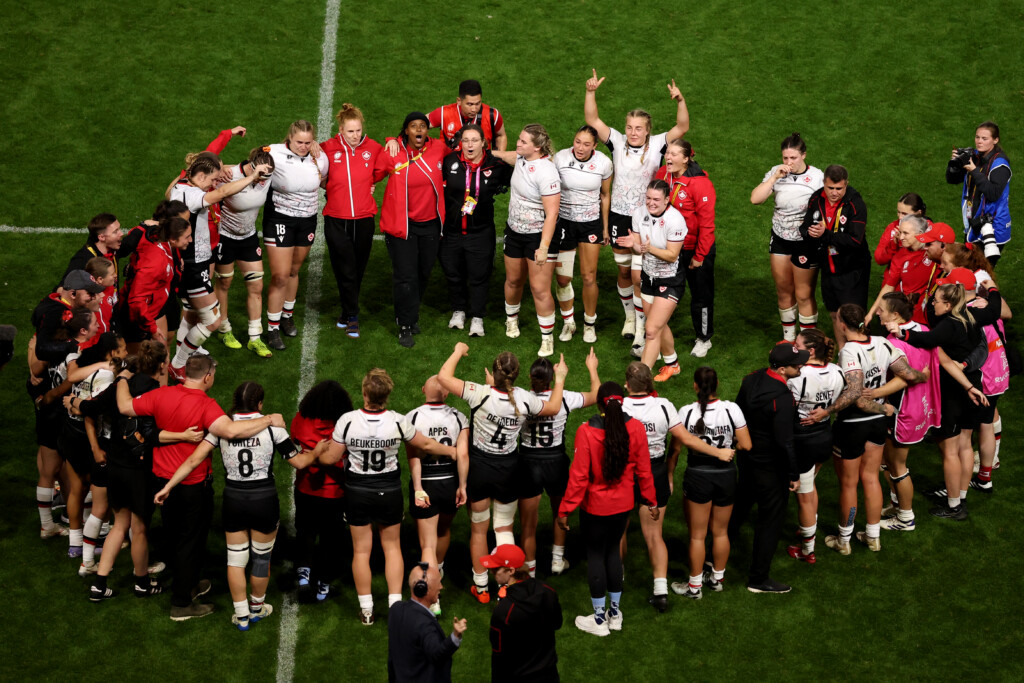
McEwen and Canada’s women’s rugby team at the semi-final game of the 2025 World Cup. (Getty Images)
The Power of Showing Up Fully
Across all her roles, McEwen recognizes the influence she carries in shaping culture within women’s sport.
“My goal is to facilitate an environment where athletes can see how powerful and strong they can be — and really celebrate it,” she notes.
Her philosophy extends beyond performance. Sport, she believes, builds resilience, confidence and life skills that carry far beyond competition. As a queer woman, McEwen also understands firsthand the power of visibility in creating environments where athletes feel supported, valued and free to be themselves.
When she first came out, the skating community was the last place she did so. At the time, identity wasn’t widely discussed in competitive figure skating. Today, she has witnessed meaningful cultural shifts toward belonging and authenticity and recognizes the role she plays in continuing that progress.
“Officials are in positions of power,” she says. “And I want athletes to know that I want you to show up as you are when you’re on the ice. There’s so much joy in watching somebody skate as their authentic self.”
She also sees how representation intersects with gender norms and physicality in sport. Women’s rugby, she notes, celebrates strength and power in ways that challenge traditional expectations. She hopes figure skating continues evolving in similar ways — embracing diverse body types and expressions of identity.
Policy changes within Skate Canada, including redefining team structures to give athletes greater freedom, are meaningful steps forward. For McEwen, these changes matter not only for today’s athletes, but for the next generation watching and learning what’s possible.
Beyond podium finishes and titles, what keeps her involved in sport is the same thing that kept her on the ice as a child: a love of growth and development.
“I’ve found so much joy in the day-to-day,” she says with a laugh. “But I can’t lie — I’m also ridiculously competitive.”
But it’s the growth she witnesses in her athletes and her students that keeps her coming back. By showing up fully as herself, she hopes to empower others to do the same.
“We want people to engage with sport, love it and be able to express themselves in it.”