
The World of Synchronized Skating: Everything You Need to Know
From April 10–11, 2026, two Canadian synchro teams will take the ice at the ISU Synchronized Skating World Championships in Salzburg, Austria. Before you cheer them on, here’s your quick guide to the dazzling world of synchro, and a glimpse at where the sport is headed next.
Figure Skating’s “Younger Sibling”
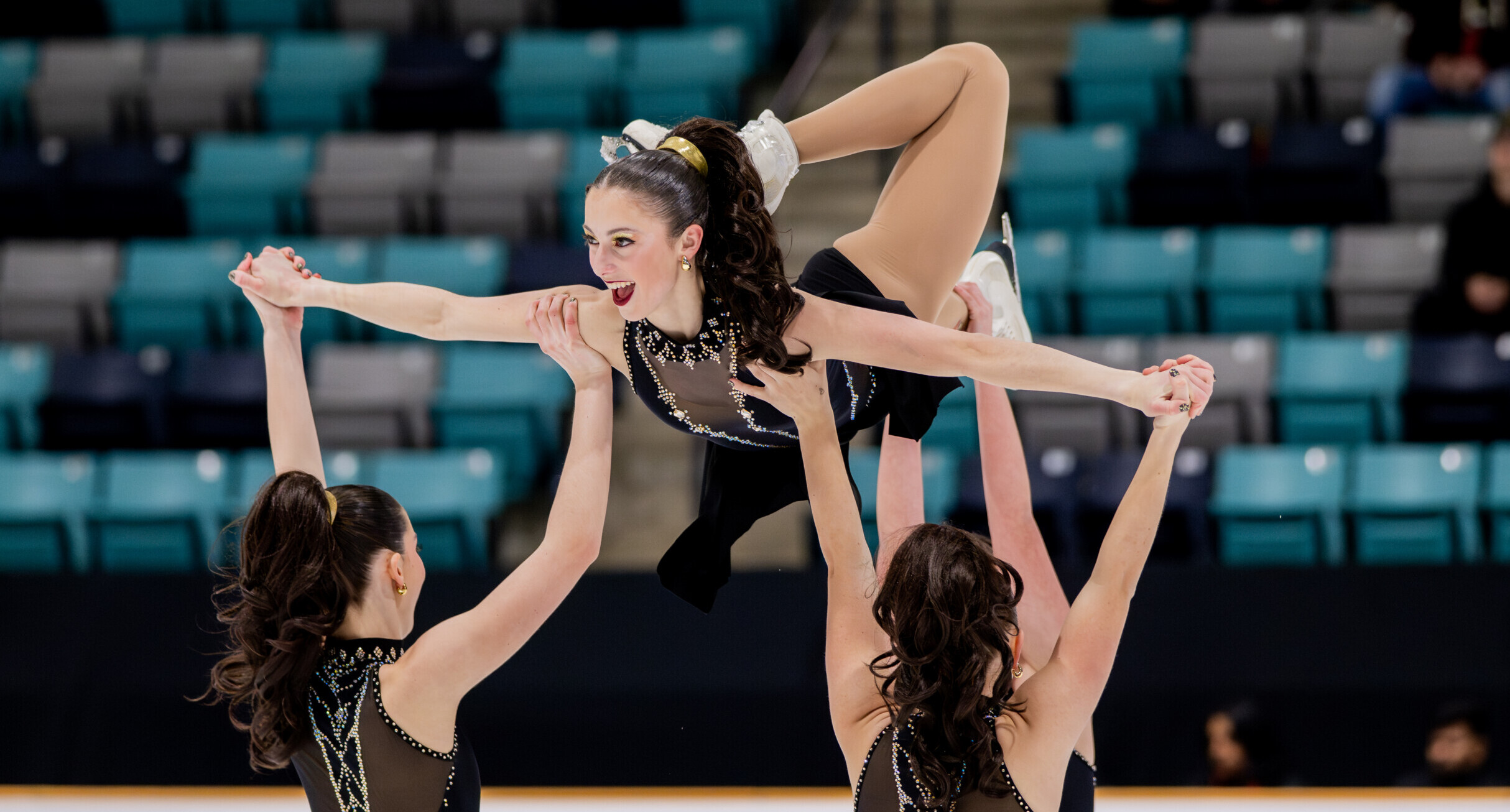
Synchronized skating is a team sport where 8 to 16 skaters move in perfect unison, combining precision, speed, and artistry to create mesmerizing performances on the ice. It is one of the fastest-growing disciplines in figure skating, but still relatively young on the international stage.
While the first International Skating Union (ISU) World Championships date back to 1896, synchro wasn’t officially recognized as a sport by the ISU until 1994, with its inaugural world championships taking place in 2000.
The sport’s roots, however, stretch further back. Born as “precision skating” in the 1950s in Michigan, USA, synchro quickly gained traction in Canada and the United States before expanding internationally. By 1989, the first international competition in Sweden brought together teams from seven nations, marking the beginning of its global rise.
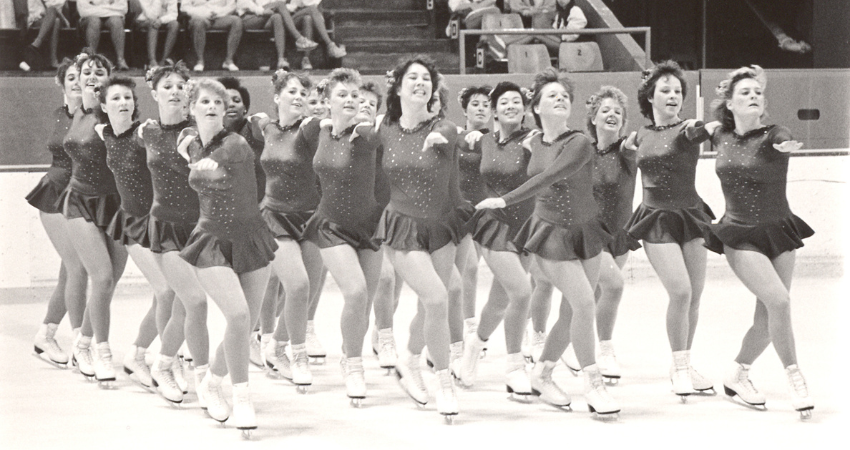
Canadian Precision Skating Championships in the 1980s.
Canada’s Synchro Legacy
Canada has played a leading role in synchro’s growth from the very beginning, hosting the world’s first national synchro championship in 1983.
Since then, Canadian teams have consistently made their mark on the international stage, earning five world titles and 15 medals across 23 world championships. Most notably, Les Suprêmes Senior made history in 2024 by becoming the first team to win three consecutive world titles.
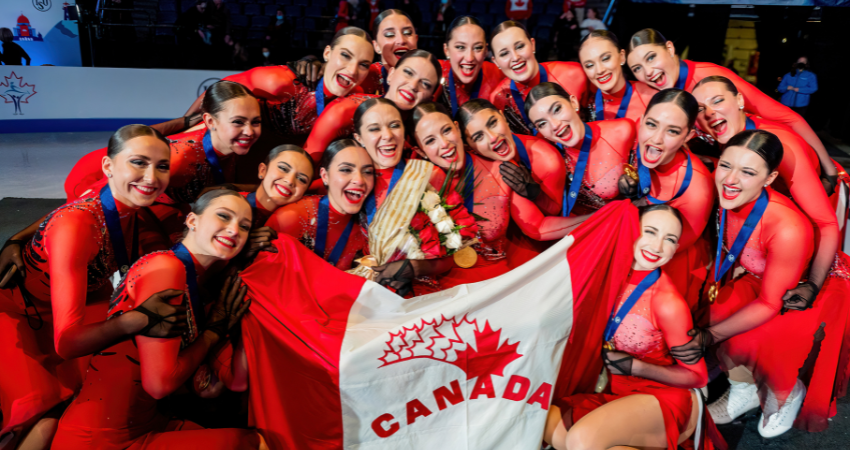
Les Suprêmes at the 2022 ISU Synchronized Skating World Championships.
This year, Canada will once again be a strong contender for the podium at Worlds. Les Suprêmes Senior and Nova Senior will represent the country as national gold and silver medallists. Both Quebec-based teams will arrive in Salzburg with momentum, following podium finishes on the ISU Challenger Series, with Les Suprêmes looking to take back their crown.
Elements to Watch For
Synchro stands out on the ice for its intricate patterns. Classic formations like wheels, circles, blocks, and lines require every skater to move in perfect unison. Then come the crowd-favourites: high-speed intersections, where skaters pass through each other with razor-sharp timing, and group lifts that add drama and intensity.
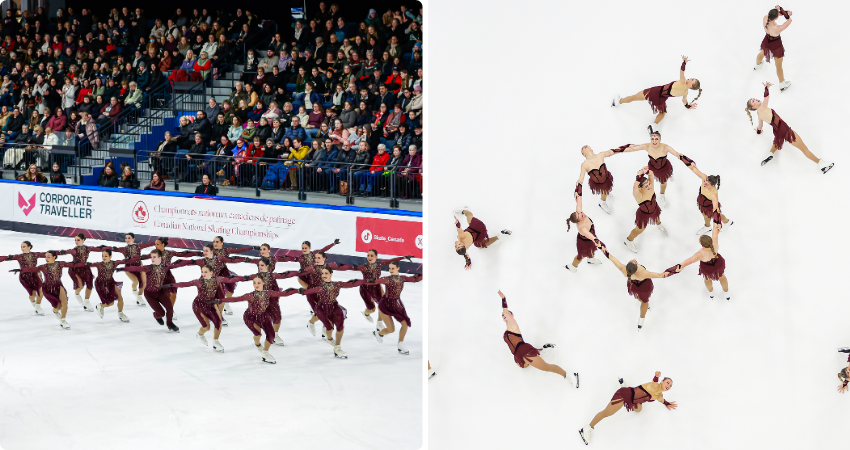
Synchro block (left) and circle (right).
Synchro also blends elements from across figure skating disciplines. For example, the twizzle, a staple of ice dance, has been reimagined in synchro, with all 12 to 16 skaters performing it simultaneously, demanding exact timing and control.
Storytelling on Ice
In synchronized skating, storytelling reaches a new level. Skaters use facial expressions and body movements to convey emotion, creating a powerful narrative that captivates the audience from start to finish. Every detail matters when delivering a show-stopping performance. Music sets the mood, costumes add character, and fierce choreography unites every element into a seamless, fluid display of talent.
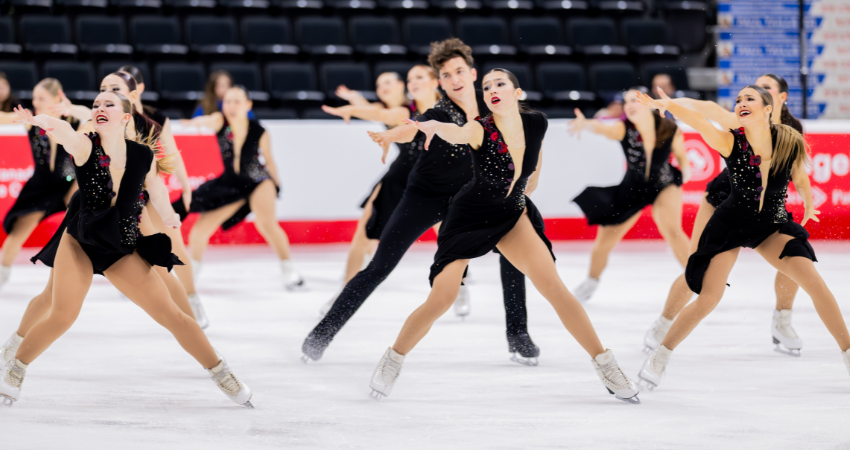
Nova Senior at the 2026 Canadian National Skating Championships in Gatineau, Quebec.
How It’s Judged
To bring all of this together, teams compete in two programs: the short and the free.
The short program emphasizes technical precision, while the free program allows for greater creativity, storytelling, and unique choreography.
Scoring is divided into two main areas:
- Technical Elements Score (TES): Execution of required elements
- Program Components Score (PCS):
- Composition (program structure and use of the ice)
- Presentation (performance and musical interpretation)
- Skating Skills (edge quality, speed, and flow)
Once the Technical Elements Score and Program Components Score are combined, any deductions are applied. After both programs are complete, teams’ scores are combined to determine their overall total and final competition standings.
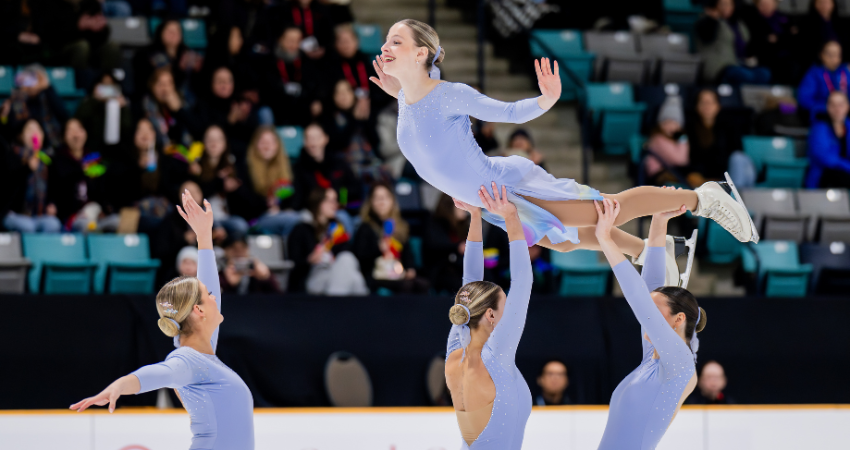
Starlites Open synchro team at the 2025 Skate Canada Cup in Waterloo, Ontario.
Feel the Synchro Spirit
Of course, synchro isn’t just about what happens on the ice — it’s about the atmosphere at the rink.
Fans are known for their vibrant costumes, loud cheers, and unmatched team spirit, creating an electric environment at competitions. This passionate community has played a major role in the sport’s rapid growth, helping synchro gain visibility within both figure skating and the broader winter sport landscape.
As that momentum builds, so has the push for synchro’s inclusion in the Olympic Winter Games.
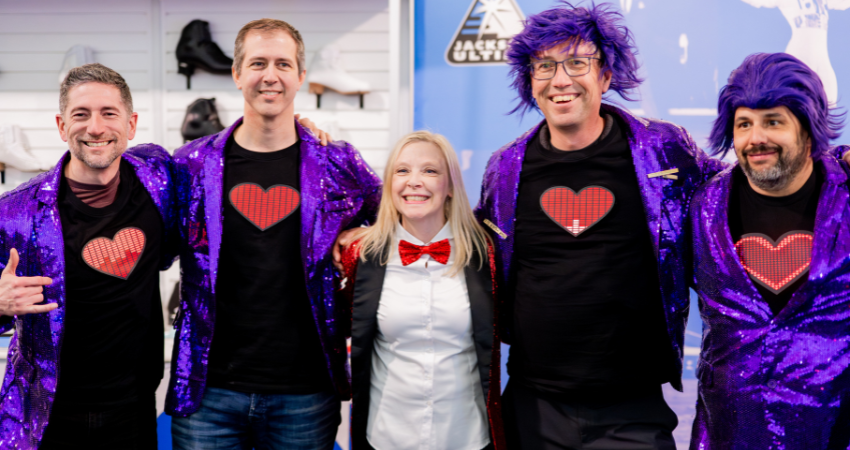
Synchro fan costumes at the 2026 Skate Canada Cup.
What’s Next for Synchro
The future of synchronized skating is bright, and increasingly Olympic-focused. In December 2025, the ISU introduced Synchro 9, a new format featuring nine skaters instead of the traditional 12 to 16. Designed to expand the sports’ global reach, the format represents a major step toward Olympic inclusion.
And that progress is already taking shape. Synchro 9 is scheduled to make its Olympic debut at the Dolomiti Valtellina 2028 Winter Youth Olympic Games, a historic milestone for the discipline.
Even more exciting, Canada is already a leading force in this new chapter, with Canadian athletes set to be one of three countries showcasing Synchro 9 at the 2026 Synchronized Skating World Championships. We can’t wait to watch this new model of synchro come to life!
Whether you’re a longtime fan or new to the sport, synchronized skating delivers speed, precision, and undeniable team spirit that you won’t want to miss. With Canada’s top teams set to take the ice, all eyes will be on Salzburg for an unforgettable weekend of competition. Follow us on social media to watch the action unfold!