
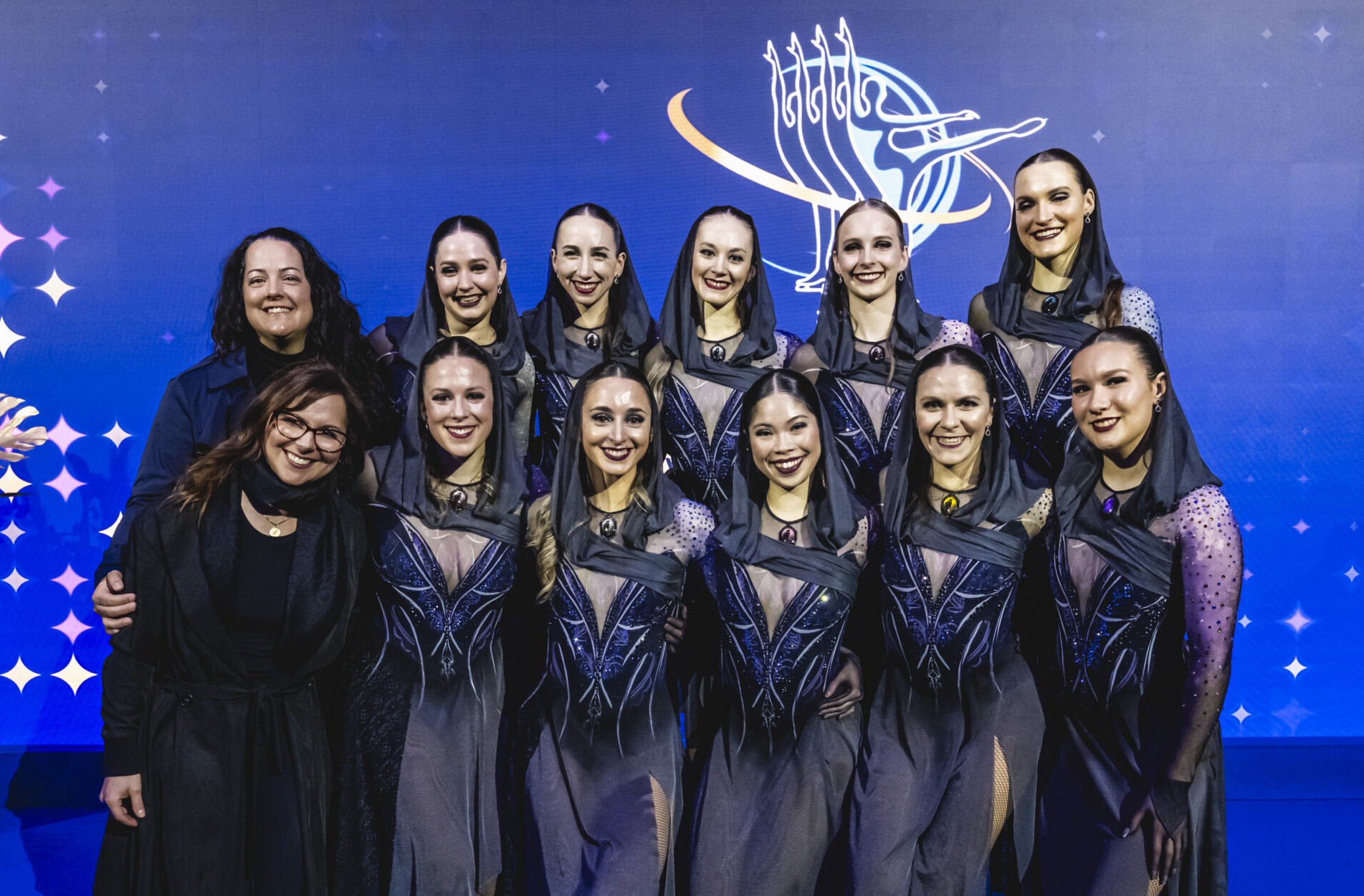
Synchro9: Inside Figure Skating’s Newest Olympic Discipline
The wait is finally over. After decades of dreaming, synchronized skating is officially heading to the Olympic Winter Games.
On July 7, 2026, the International Olympic Committee (IOC) announced that Synchro9 will make its Olympic debut at the Alpes 2030 Olympic Winter Games, marking the first time that synchronized skating will be included in the Olympic program.
This means even more incredible skating, energetic team performances and another opportunity to cheer for Canada on the world’s biggest sporting stage.
Here’s everything you need to know about Synchro9.
What Is Synchro9?
Synchro9 reimagines synchronized skating while preserving the precision, speed, and teamwork that defines the sport.
Instead of the traditional 12 or 16-skater team, Synchro9 features nine skaters and one alternate. The smaller team format creates tighter formations and faster transitions, allowing every movement to stand out for fans in the stands and at home.
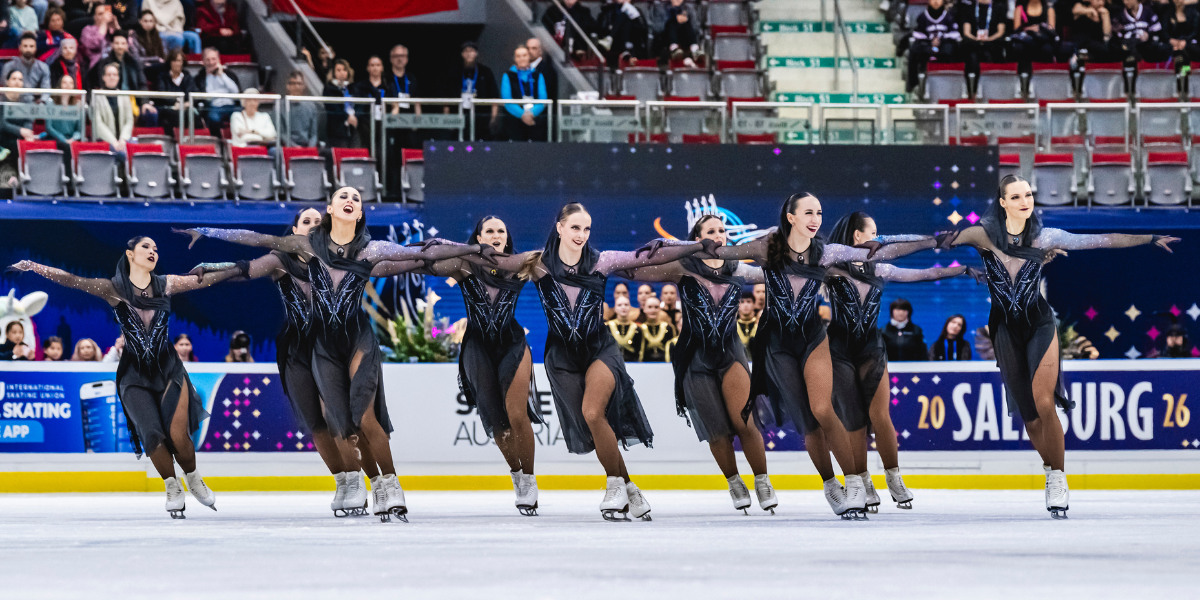
Les Suprêmes Synchro9 demonstration | 2026 ISU World Synchronized Skating Championships | Photo credit: International Skating Union
The competition format has also been redesigned. Rather than performing a traditional Short and Free program, teams compete in a three-stage knockout format:
- Opening program – A themed performance (the 2026-2027 theme is Street Dance)
- Semi-final – A program set to music within a required beats-per-minute range
- Free program – A creative showcase of each team’s technical ability and artistry.
While the format is new, the foundations of the sport remain the same. Teams must execute the signature formations of synchronized skating alongside required technical elements. Performances are scored using a streamlined judging system that scores Technique (difficulty and synchronization) and Artistry (originality and performance) on a scale of 1 to 100.
Why Was Synchro9 Created?
For years, synchronized skating has been pursuing Olympic inclusion. One of the biggest hurdles, however, was team size.
“One of the biggest challenges was bringing 16 athletes per team to the Olympic Village. They asked us to develop a format with fewer athletes, a project that began to be developed last fall,” Les Suprêmes coach Marilyn Langlois explained to Radio-Canada.
By reducing the number of athletes while maintaining the essence of the sport, Synchro9 provides a solution that works within Olympic athlete quotas without sacrificing the excitement and technical excellence that makes synchronized skating special. The result is a discipline that is dynamic, accessible, and packed with excitement.
The inclusion of Synchro9 also supports the IOC’s commitment to achieving gender parity at the Alpes 2030 Olympic Winter Games.
Canada’s Role in Making History
Canada has been at the forefront of synchronized skating since the sport’s earliest days. In 1983, Skate Canada hosted the world’s first national ‘Precision Skating Championships’ helping establish the foundation for the sport’s growth.
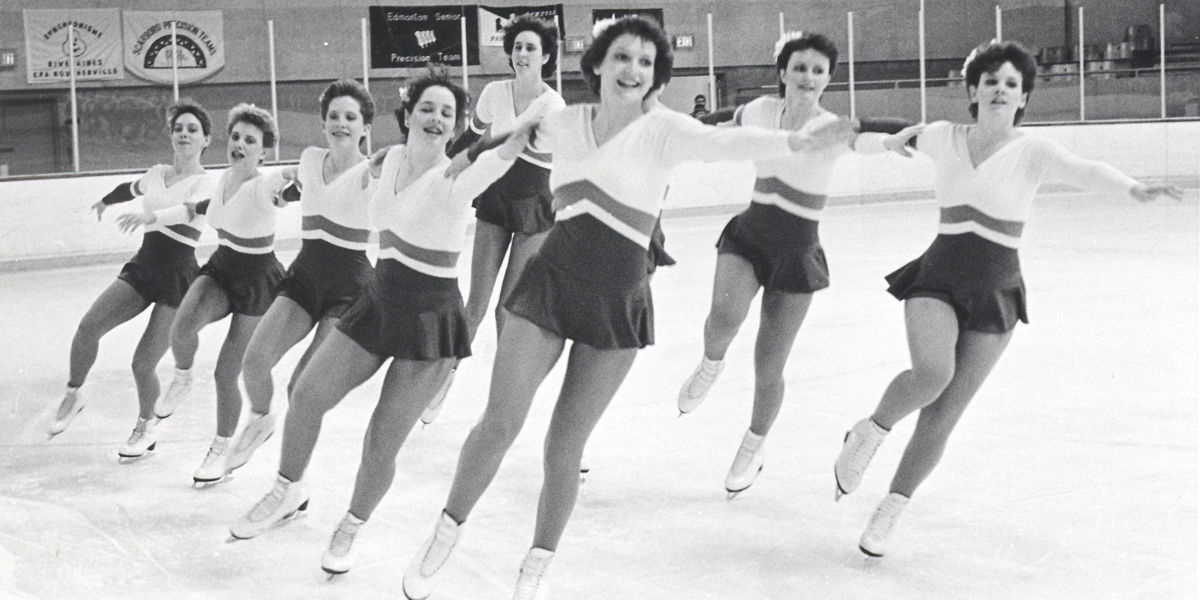
1986 Canadian Precision Skating Championships
Since then, Canadian teams have continually proven to be among the world’s best. Most notably, Les Suprêmes made history by becoming the first team to win three consecutive world titles in 2024, before capturing a fourth title in five years in 2026.
“Canada is a powerhouse in Synchronized Skating, with a long history of success in this discipline,” said Dr. Shae Zukiwsky, Chief Sport Officer at Skate Canada. “Our domestic athlete development pathways for Synchronized Skating are strong and we have a vibrant, passionate Synchro community in our country. We aim to build upon these many strengths in Synchro to develop this exciting new Synchro9 discipline here in Canada.”
Canada has also played a leading role in shaping Synchro9 itself. Canadian coaches, officials and athletes worked alongside the ISU and other member federations to help develop and refine the format ahead of its international rollout.
Dr. Zukiwsky added: “We have talented Canadian officials serving on the ISU Working Groups tasked with determining the rules and regulations of this burgeoning new discipline. At the recent ISU Officials Training Seminar held in Frankfurt, Canada had five officials receive their first Synchro9 judging certification. Skate Canada is hard at work learning and preparing for future success in Synchro9.”
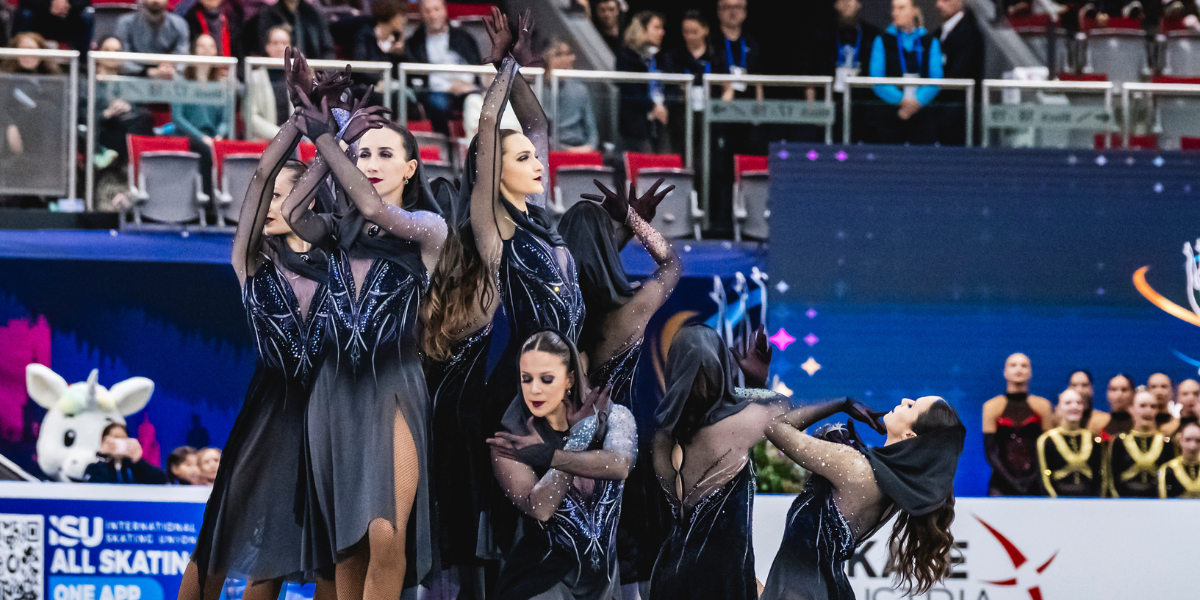
Photo credit: International Skating Union
Fans got an early glimpse of the sport at the 2026 ISU World Synchronized Skating Championships where Canada’s Les Suprêmes were among the three countries to perform a Synchro9 demonstration.
The Road to the Alpes 2030
The journey to the Olympic Games is just beginning. Before its Olympic debut in 2030, Synchro9 will build momentum through international competitions, including appearing at the Dolomiti Valtellina 2028 Winter Youth Olympic Games.
The inaugural Synchro9 competition series will take place during the 2026–27 season, with events scheduled in:
- Irvine, USA – November 7-8, 2026
- Vantaa, Finland – November 28-29, 2026
- Rouen, France – January 29-30, 2
- Budapest, Hungary – February 20-21, 2027
The season will culminate at the 2027 ISU Synchronized Skating World Championships in Nottingham, Great Britain, where the world’s top Junior and Ssenior Synchro9 teams will compete.
After decades of growth, synchronized skating is finally entering its Olympic era. As the countdown to Alpes 2030 begins, fans around the world will have the opportunity to witness the next evolution of the sport—and cheer on Canada’s continued leadership on the international stage.
Want to follow the journey? Become a Skating Insider for exclusive athlete stories, competition updates and behind-the-scenes coverage on the road to Alpes 2030.